Membership

Current justices
There are currently nine justices on the Supreme Court: Chief Justice John Roberts and eight associate justices. Among the current members of the Court, Clarence Thomas is the longest-serving justice, with a tenure of 10,622 days (29 years, 29 days) as of November 21, 2020; the most recent justice to join the court is Amy Coney Barrett, whose tenure began on October 27, 2020.
| Justice / birthdate and place |
Appointed by | SCV | Age at | Start date / length of service |
Previous position or office (most recent prior to joining the Court) |
Succeeded | ||
|---|---|---|---|---|---|---|---|---|
| Start | Present | |||||||

|
John Roberts January 27, 1955 Buffalo, New York |
G. W. Bush | 78–22 | 50 | 65 | September 29, 2005 15 years, 53 days |
Judge of the United States Court of Appeals for the District of Columbia Circuit (2003–2005) | Rehnquist |

|
Clarence Thomas June 23, 1948 Pin Point, Georgia |
G. H. W. Bush | 52–48 | 43 | 72 | October 23, 1991 29 years, 29 days |
Judge of the United States Court of Appeals for the District of Columbia Circuit (1990–1991) | Marshall |
|
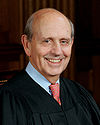
Stephen Breyer August 15, 1938 San Francisco, California |
Clinton | 87–9 | 55 | 82 | August 3, 1994 26 years, 110 days |
Chief Judge of the United States Court of Appeals for the First Circuit (1990–1994) | Blackmun |
|
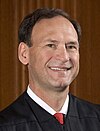
Samuel Alito April 1, 1950 Trenton, New Jersey |
G. W. Bush | 58–42 | 55 | 70 | January 31, 2006 14 years, 295 days |
Judge of the United States Court of Appeals for the Third Circuit (1990–2006) | O'Connor |
|
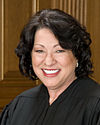
Sonia Sotomayor June 25, 1954 The Bronx, New York |
Obama | 68–31 | 55 | 66 | August 8, 2009 11 years, 105 days |
Judge of the United States Court of Appeals for the Second Circuit (1998–2009) | Souter |

|
Elena Kagan April 28, 1960 Manhattan, New York |
Obama | 63–37 | 50 | 60 | August 7, 2010 10 years, 106 days |
Solicitor General of the United States (2009–2010) | Stevens |

|
Neil Gorsuch August 29, 1967 Denver, Colorado |
Trump | 54–45 | 49 | 53 | April 10, 2017 3 years, 225 days |
Judge of the United States Court of Appeals for the Tenth Circuit (2006–2017) | Scalia |

|
Brett Kavanaugh February 12, 1965 Washington, D.C. |
Trump | 50–48 | 53 | 55 | October 6, 2018 2 years, 46 days |
Judge of the United States Court of Appeals for the District of Columbia Circuit (2006–2018) | Kennedy |
|
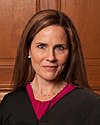
Amy Coney Barrett January 28, 1972 New Orleans, Louisiana |
Trump | 52–48 | 48 | 48 | October 27, 2020 25 days |
Judge of the United States Court of Appeals for the Seventh Circuit (2017–2020) | Ginsburg |
| Source: | ||||||||
Length of tenure
This graphical timeline depicts the length of each current Supreme Court justice's tenure (not seniority) on the Court:
Court demographics
The Court currently has six male and three female justices. Among the nine justices, there is one African-American justice (Justice Thomas) and one Hispanic justice (Justice Sotomayor). One of the justices was born to at least one immigrant parent: Justice Alito's father was born in Italy.
At least six justices are Roman Catholics and two are Jewish. It is unclear whether Neil Gorsuch considers himself a Catholic or an Episcopalian. Historically, most justices have been Protestants, including 36 Episcopalians, 19 Presbyterians, 10 Unitarians, 5 Methodists, and 3 Baptists. The first Catholic justice was Roger Taney in 1836, and 1916 saw the appointment of the first Jewish justice, Louis Brandeis. In recent years the historical situation has reversed, as most recent justices have been either Catholic or Jewish.
All current justices except for Amy Coney Barrett have Ivy League backgrounds as either undergraduates or law students. Barrett received her bachelor's degree at Rhodes College and her law degree at the University of Notre Dame. Three justices are from the state of New York, and one each is from California, New Jersey, Georgia, Colorado, Louisiana and Washington, D.C. In the 19th century, every justice was a man of Northwestern European descent, and almost always Protestant. Diversity concerns focused on geography, to represent all regions of the country, rather than religious, ethnic, or gender diversity.
Racial, ethnic, and gender diversity in the Court increased in the late 20th century. Thurgood Marshall became the first African-American justice in 1967. Sandra Day O'Connor became the first female justice in 1981. In 1986, Antonin Scalia became the first Italian-American justice. Marshall was succeeded by African-American Clarence Thomas in 1991. O'Connor was joined by Ruth Bader Ginsburg in 1993. After O'Connor's retirement Ginsburg was joined in 2009 by Sonia Sotomayor, the first Hispanic and Latina justice, and in 2010 by Elena Kagan. After Ginsburg's death on September 18, 2020, Amy Coney Barrett was confirmed as the fifth woman in the Court's history on October 26, 2020.
There have been six foreign-born justices in the Court's history: James Wilson (1789–1798), born in Caskardy, Scotland; James Iredell (1790–1799), born in Lewes, England; William Paterson (1793–1806), born in County Antrim, Northern Ireland; David Brewer (1889–1910), born to American missionaries in Smyrna, Ottoman Empire (now Izmir, Turkey); George Sutherland (1922–1939), born in Buckinghamshire, England; and Felix Frankfurter (1939–1962), born in Vienna, Austria-Hungary (now in Austria).
Retired justices
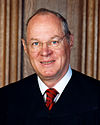
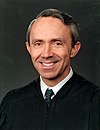
There are currently three living retired justices of the Supreme Court of the United States: Sandra Day O'Connor, Anthony Kennedy, and David Souter. As retired justices, they no longer participate in the work of the Supreme Court, but may be designated for temporary assignments to sit on lower federal courts, usually the United States Courts of Appeals. Such assignments are formally made by the chief justice, on request of the chief judge of the lower court and with the consent of the retired justice. In recent years, Justice O'Connor has sat with several Courts of Appeals around the country, and Justice Souter has frequently sat on the First Circuit, the court of which he was briefly a member before joining the Supreme Court.
The status of a retired justice is analogous to that of a circuit or district court judge who has taken senior status, and eligibility of a supreme court justice to assume retired status (rather than simply resign from the bench) is governed by the same age and service criteria.
In recent times, justices tend to strategically plan their decisions to leave the bench with personal, institutional, ideological, partisan and sometimes even political factors playing a role. The fear of mental decline and death often motivates justices to step down. The desire to maximize the Court's strength and legitimacy through one retirement at a time, when the Court is in recess, and during non-presidential election years suggests a concern for institutional health. Finally, especially in recent decades, many justices have timed their departure to coincide with a philosophically compatible president holding office, to ensure that a like-minded successor would be appointed.
| Justice / Birthdate and place |
Appointed by | Retired under | Age at | Tenure | |||||
|---|---|---|---|---|---|---|---|---|---|
| Start | Retirement | Present | Start date | End date | Length | ||||

|
Sandra Day O'Connor March 26, 1930 El Paso, Texas |
Reagan | G. W. Bush | 51 | 75 | 90 | September 25, 1981 | January 31, 2006 | 24 years, 128 days |
|
Anthony Kennedy July 23, 1936 Sacramento, California |
Reagan | Trump | 51 | 82 | 84 | February 18, 1988 | July 31, 2018 | 30 years, 163 days |
|
David Souter September 17, 1939 Melrose, Massachusetts |
G. H. W. Bush | Obama | 51 | 69 | 81 | October 9, 1990 | June 29, 2009 | 18 years, 263 days |
| Source: | |||||||||
Seniority and seating
 | This section needs additional citations for verification. (January 2019) (Learn how and when to remove this template message) |
For the most part, the day-to-day activities of the justices are governed by rules of protocol based upon the seniority of justices. The chief justice always ranks first in the order of precedence—regardless of the length of their service. The associate justices are then ranked by the length of their service. The chief justice sits in the center on the bench, or at the head of the table during conferences. The other justices are seated in order of seniority. The senior-most associate justice sits immediately to the chief justice's right; the second most senior sits immediately to their left. The seats alternate right to left in order of seniority, with the most junior justice occupying the last seat. Therefore, starting in the middle of the October 2020 term, the court will sit as follows from left to right, from the perspective of those facing the Court: Kavanaugh, Kagan, Alito, Thomas (most senior associate justice), Roberts (chief justice), Breyer, Sotomayor, Gorsuch, and Barrett. Likewise, when the members of the Court gather for official group photographs, justices are arranged in order of seniority, with the five most senior members seated in the front row in the same order as they would sit during Court sessions, and the four most junior justices standing behind them, again in the same order as they would sit during Court sessions.
In the justices' private conferences, current practice is for them to speak and vote in order of seniority, beginning with the chief justice first and ending with the most junior associate justice. By custom, the most junior associate justice in these conferences is charged with any menial tasks the justices may require as they convene alone, such as answering the door of their conference room, serving beverages and transmitting orders of the court to the clerk. Justice Joseph Story served the longest as junior justice, from February 3, 1812, to September 1, 1823, for a total of 4,228 days. Justice Stephen Breyer follows very closely behind serving from August 3, 1994, to January 31, 2006, for a total of 4,199 days. Justice Elena Kagan comes in at a distant third serving from August 6, 2010, to April 10, 2017, for a total of 2,439 days.
Salary
As of 2018, associate justices receive a yearly salary of $255,300 and the chief justice is paid $267,000 per year. Article III, Section 1 of the U.S. Constitution prohibits Congress from reducing the pay for incumbent justices. Once a justice meets age and service requirements, the justice may retire. Judicial pensions are based on the same formula used for federal employees, but a justice's pension, as with other federal courts judges, can never be less than their salary at the time of retirement.
Judicial leanings
Although justices are nominated by the president in power, and receive confirmation by the Senate, justices do not represent or receive official endorsements from political parties, as is accepted practice in the legislative and executive branches. Jurists are, however, informally categorized in legal and political circles as being judicial conservatives, moderates, or liberals. Such leanings, however, generally refer to legal outlook rather than a political or legislative one. The nominations of justices are endorsed by individual politicians in the legislative branch who vote their approvalclarification needed or disapproval of the nominated justice. The ideologies of jurists can be measured and compared with several metrics, including the Segal–Cover score, Martin-Quinn score, and Judicial Common Space score.
Following the confirmation of Amy Coney Barrett in 2020, the Court currently consists of six justices appointed by Republican presidents and three appointed by Democratic presidents. It is popularly accepted that Chief Justice Roberts and associate justices Thomas, Alito, Gorsuch, Kavanaugh, and Barrett appointed by Republican presidents, compose the Court's conservative wing. Justices Breyer, Sotomayor and Kagan, appointed by Democratic presidents, compose the Court's liberal wing. Gorsuch had a track record as a reliably conservative judge in the 10th circuit. Kavanaugh was considered one of the more conservative judges in the DC Circuit prior to his appointment to the Supreme Court. Likewise, Barrett's brief track record on the Seventh Circuit is conservative. Prior to Justice Ginsburg's death, Chief Justice Roberts was considered the Court's median justice (in the middle of the ideological spectrum, with four justices more liberal and four more conservative than him), making him the ideological center of the Court.
Tom Goldstein argued in an article in SCOTUSblog in 2010, that the popular view of the Supreme Court as sharply divided along ideological lines and each side pushing an agenda at every turn is "in significant part a caricature designed to fit certain preconceptions". He pointed out that in the 2009 term, almost half the cases were decided unanimously, and only about 20% were decided by a 5-to-4 vote. Barely one in ten cases involved the narrow liberal/conservative divide (fewer if the cases where Sotomayor recused herself are not included). He also pointed to several cases that defied the popular conception of the ideological lines of the Court. Goldstein further argued that the large number of pro-criminal-defendant summary dismissals (usually cases where the justices decide that the lower courts significantly misapplied precedent and reverse the case without briefing or argument) were an illustration that the conservative justices had not been aggressively ideological. Likewise, Goldstein stated that the critique that the liberal justices are more likely to invalidate acts of Congress, show inadequate deference to the political process, and be disrespectful of precedent, also lacked merit: Thomas has most often called for overruling prior precedent (even if long standing) that he views as having been wrongly decided, and during the 2009 term Scalia and Thomas voted most often to invalidate legislation.
According to statistics compiled by SCOTUSblog, in the twelve terms from 2000 to 2011, an average of 19 of the opinions on major issues (22%) were decided by a 5–4 vote, with an average of 70% of those split opinions decided by a Court divided along the traditionally perceived ideological lines (about 15% of all opinions issued). Over that period, the conservative bloc has been in the majority about 62% of the time that the Court has divided along ideological lines, which represents about 44% of all the 5–4 decisions.
In the October 2010 term, the Court decided 86 cases, including 75 signed opinions and 5 summary reversals (where the Court reverses a lower court without arguments and without issuing an opinion on the case). Four were decided with unsigned opinions, two cases affirmed by an equally divided Court, and two cases were dismissed as improvidently granted. Justice Kagan recused herself from 26 of the cases due to her prior role as United States Solicitor General. Of the 80 cases, 38 (about 48%, the highest percentage since the October 2005 term) were decided unanimously (9–0 or 8–0), and 16 decisions were made by a 5–4 vote (about 20%, compared to 18% in the October 2009 term, and 29% in the October 2008 term). However, in fourteen of the sixteen 5–4 decisions, the Court divided along the traditional ideological lines (with Ginsburg, Breyer, Sotomayor, and Kagan on the liberal side, and Roberts, Scalia, Thomas, and Alito on the conservative, and Kennedy providing the "swing vote"). This represents 87% of those 16 cases, the highest rate in the past 10 years. The conservative bloc, joined by Kennedy, formed the majority in 63% of the 5–4 decisions, the highest cohesion rate of that bloc in the Roberts Court.
The October 2017 term had a low rate of unanimous rulings, with only 39% of the cases decided by unanimous rulings, the lowest percentage since the October 2008 term when 30% of rulings were unanimous. Chief Justice Roberts was in the majority most often (68 out of 73 cases, or 93.2%), with retiring Justice Anthony Kennedy in second (67 out of 73 cases, or 91.8%); this was typical of the Roberts Court, in which Roberts and Kennedy have been in the majority most frequently in all terms except for the 2013 and 2014 terms (though Kennedy was in the top on both those terms). Justice Sotomayor was the justice least likely to be in the majority (in 50 out of 73 cases, or 68.5%). The highest agreement between justices was between Ginsburg and Sotomayor, who agreed on 95.8% of the cases, followed by Thomas and Alito agreeing on 93% of cases. There were 19 cases that were decided by a 5–4 vote (26% of the total cases); 74% of those cases (14 out of 19) broke along ideological lines, and for the first time in the Roberts Court, all of those resulted in a conservative majority, with Roberts, Kennedy, Thomas, Alito, and Gorsuch on the majority.
The October 2018 term, which saw the replacement of Anthony Kennedy by Brett Kavanaugh, once again saw a low rate of unanimity: only 28 of 71 decided cases were decided by a unanimous court, about 39% of the cases. Of these, only 19 cases had the Justices in total agreement. Chief Justice Roberts was once again the justice most often in the majority (61 out of 72 cases, or 85% of the time). Though Kavanaugh had a higher percentage of times in the majority, he did not participate in all cases, voting in the majority 58 out of 64 times, or 91% of the cases in which he participated. Of the justices who participated in all 72 cases, Kagan and Alito tied in second place, voting in the majority 59 out of 72 times (or 82% of the time). Looking only at cases that were not decided unanimously, Roberts and Kavanaugh were the most frequently in the majority (33 cases, with Roberts being in the majority in 75% of the divided cases, and Kavanaugh in 85% of the divided cases he participated in). Of 20 cases that were decided by a vote of 5–4, eight featured the conservative justices in the majority (Roberts, Thomas, Alito, Gorsuch, and Kavanaugh), and eight had the liberal justices (Ginsburg, Breyer, Sotomayor, and Kagan) joined by a conservative: Gorsuch was the most frequent, joining them four times, and the remaining conservative justices joining the liberals once each. The remaining 4 cases were decided by different coalitions. The highest agreement between justices was between Roberts and Kavanaugh, who agreed at least in judgement 94% of the time; the second highest agreement was again between Ginsburg and Sotomayor, who agreed 93% of the time. The highest rate of full agreement was between Ginsburg and Kagan (82% of the time), closely followed by Roberts and Alito, Ginsburg and Sotomayor, and Breyer and Kagan (81% of the time). The largest rate of disagreement was between Thomas and both Ginsburg and Sotomayor; Thomas disagreed with each of them 50% of the time.


Comments
Post a Comment